
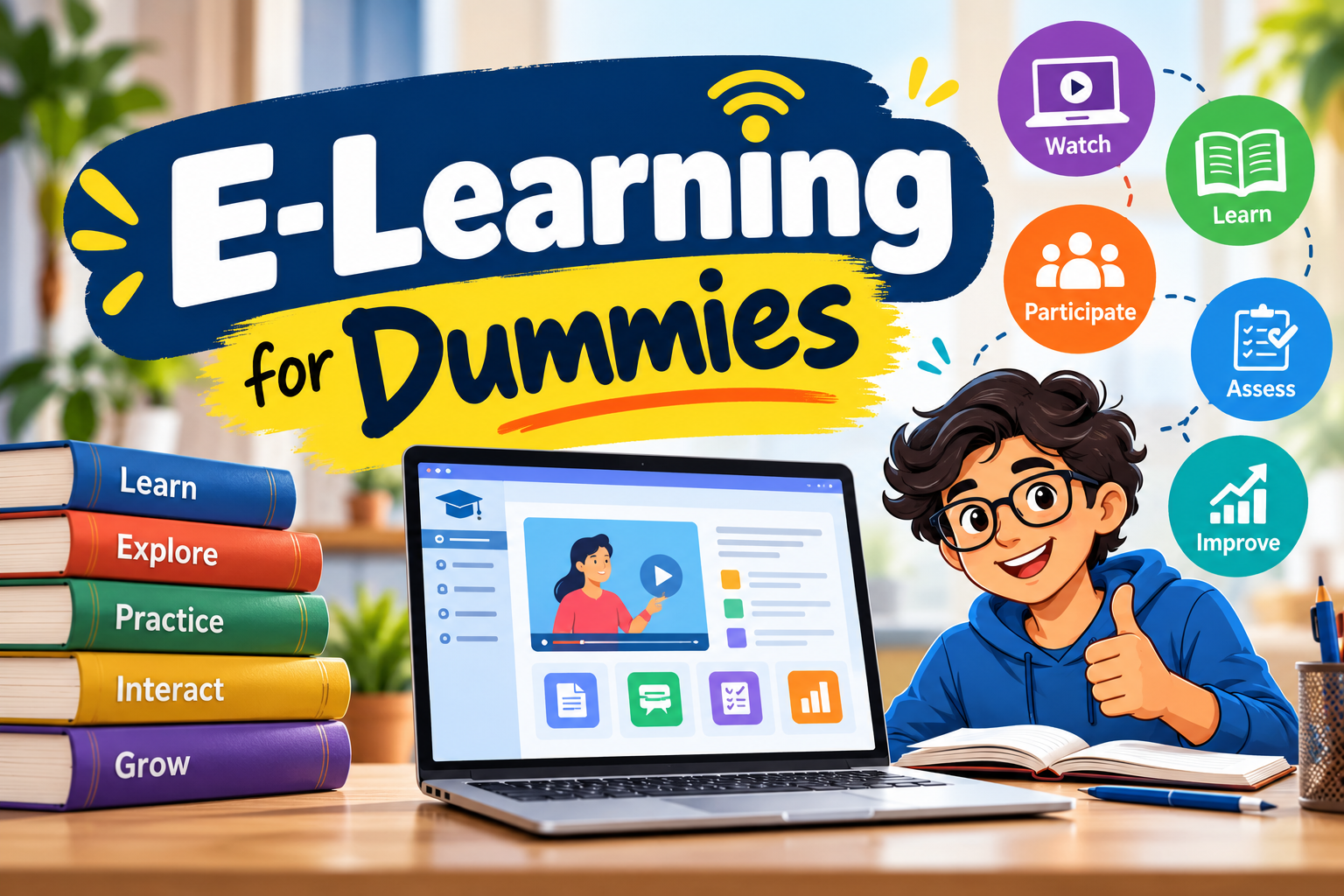
An e-learning environment typically includes learners, instructors, digital content, communication tools, and a learning platform. A Learning Management System (LMS), such as Moodle, provides a central space where instructors can organise courses, upload learning materials, conduct assessments, facilitate discussions, and monitor learner progress. Learners can log in to access course content, submit assignments, participate in quizzes, receive feedback, and track their achievements.
E-learning can take several forms. Synchronous learning takes place in real time through live online classes, video conferences, and interactive sessions. Asynchronous learning allows learners to access recorded lectures, reading materials, and activities at their convenience. Blended learning combines online instruction with face-to-face teaching, while self-paced learning enables individuals to progress through course materials according to their needs and abilities.
Essential Components of E-Learning
An effective e-learning experience brings together several important elements. Learning objectives help learners understand what they are expected to achieve. Well-organised content presents information in a clear and meaningful way. Multimedia resources, including images, audio, video, and animations, can make complex concepts easier to understand. Interactive activities encourage active participation, while quizzes and assignments help assess understanding. Communication tools enable learners to ask questions, exchange ideas, and receive guidance from instructors.
Benefits of E-Learning
One of the greatest advantages of e-learning is flexibility. Learners can often access educational materials from different locations and study at convenient times. Digital platforms can provide a wide range of resources, support different learning preferences, and reduce some of the geographical and physical barriers associated with conventional education. E-learning also encourages independent learning, digital literacy, time management, and continuous professional development. Instructors can update course materials, provide timely feedback, and use assessment data to identify areas where learners may need additional support.
Challenges of E-Learning
Despite its advantages, e-learning also presents certain challenges. Limited internet connectivity, inadequate access to digital devices, and low levels of digital literacy may prevent some learners from participating effectively. Learners may also experience distractions, reduced social interaction, or difficulties maintaining motivation. Poorly designed courses can make online learning confusing and ineffective. These challenges can be addressed through accessible course design, clear instructions, engaging activities, appropriate technical support, and regular communication between learners and instructors.
The Role of Learners and Instructors
Successful e-learning requires active participation from both learners and instructors. Learners should establish study routines, manage their time, participate in discussions, complete activities, and seek help when necessary. Instructors should provide structured learning materials, explain expectations clearly, encourage interaction, and offer constructive feedback. Rather than simply transferring classroom notes to a digital platform, effective e-learning focuses on creating meaningful learning experiences that promote understanding, application, and reflection.
Getting Started with E-Learning
For beginners, the first step is to become familiar with the learning platform and its basic functions. Learners should know how to log in, navigate courses, open resources, submit assignments, attempt quizzes, and communicate with instructors. They should also develop responsible digital habits, protect their login credentials, respect copyright, and evaluate the reliability of online information. Regular participation and consistent practice can gradually build confidence and improve learning outcomes.
- Teacher: Saptarshi Ghosh